
Recently, Beike released its “2025 Environmental, Social and Governance Report.” The report aligns with international frameworks such as the Hong Kong Stock Exchange’s “ESG Reporting Code,” the Nasdaq Stock Exchange’s “ESG Reporting Guidance 2.0,” the UN SDGs, the GRI Standards, and IFRS S2, demonstrating a strong compliance awareness and an internationally oriented disclosure approach. However, in terms of the depth of disclosure on key topics, some core responsibility issues still exhibit a situation where “narrative outweighs data,” and there remains room for further improvement in quantification and transparency.
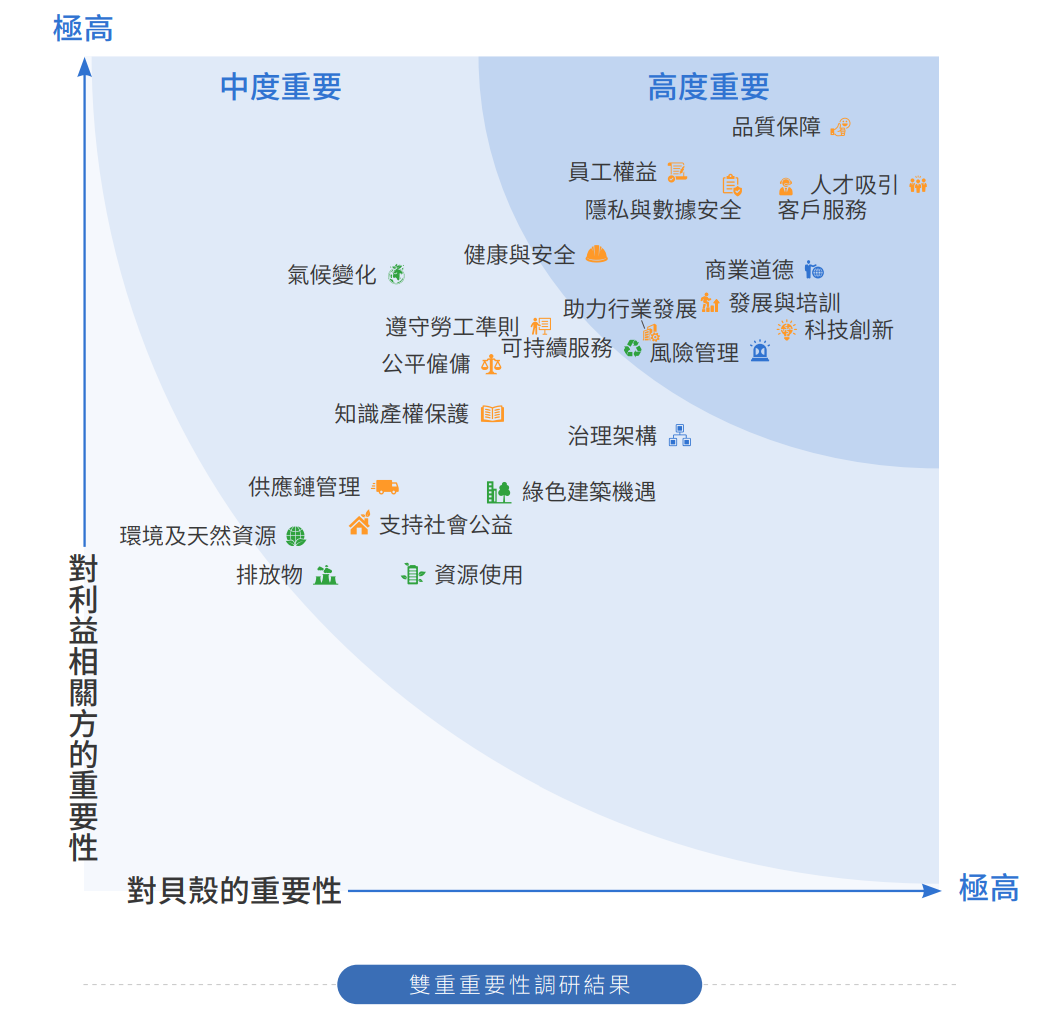
On the governance dimension, the report addresses governance structure, ESG strategy, risk management, and business ethics. The company incorporates ESG performance into the evaluation system for senior management and directly links the compensation of core management, including the chairman and chief financial officer, to goals such as climate action, thereby strengthening management’s accountability on sustainability issues.

In terms of information security and privacy protection, the report discloses that Beike experienced no major data breach incidents or significant information security accidents in 2025. Meanwhile, the company’s security committee engaged professional third parties to conduct self-inspection initiatives targeting more than ten apps and mini-programs of Beike’s core business, carrying out investigations covering the personal information lifecycle and data security lifecycle, completing over 200 inspections, and identifying and rectifying more than 30 risks. All of Beike’s consumer-facing client apps have also obtained 100% authoritative information security certifications either domestically or internationally.
However, external public opinion still reflects certain controversies regarding the platform’s “user authorization boundaries” and “transparency in data usage.” According to publicly available information, “Beike Zhaofang | Pre-owned Homes, New Homes, Rentals & Renovation” (version 9.91.2, WeChat Mini Program) was reported by the National Computer Virus Emergency Response Center in February 2025 for privacy non-compliance. The issue involved the personal information processor failing to adopt corresponding security technical measures such as encryption and de-identification, based on the purposes and methods of personal information processing, the types of personal information, the impact on personal rights and interests, and possible security risks.
Furthermore, according to media reports, some users reported that after they consulted agents through virtual numbers on Beike Zhaofang, the agents could view users’ real mobile phone numbers after the call and conduct follow-up marketing. In response, the platform’s customer service stated that this mechanism is part of an “effective customer conversion” process. Although the platform displays “number encryption” on the front end, the explanations regarding the subsequent number conversion rules and the scope of user authorization remain rather vague, which can easily lead to misunderstandings about the privacy protection mechanism.
On the social dimension, Beike defines itself as a “builder of the real estate service ecosystem.” The report addresses topics such as “supporting industry development,” “technological innovation,” and “employee rights and care.”

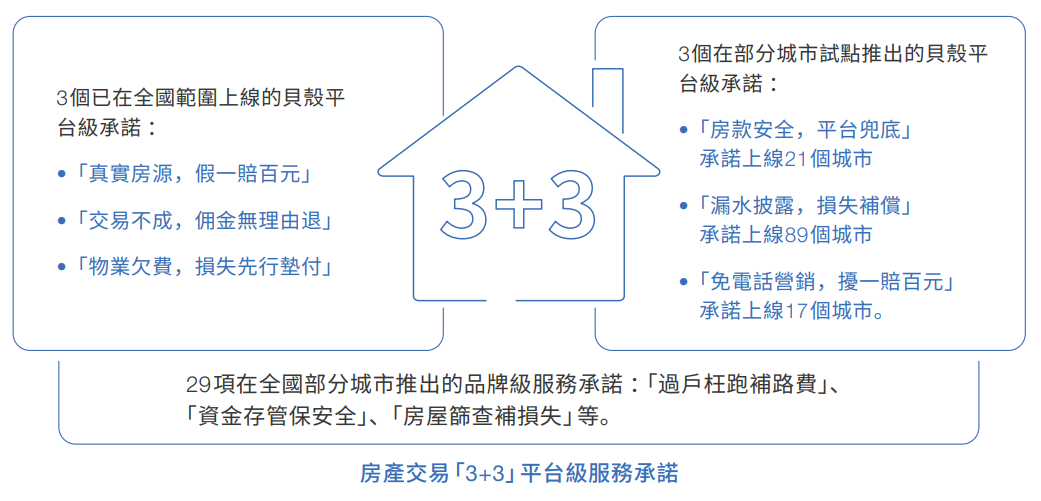
In terms of consumer housing, in 2025 Beike launched a “3+3” platform-level service commitment, and piloted guarantee mechanisms such as housing fund security and risk compensation in some cities, cumulatively avoiding and intercepting potential fund losses exceeding RMB 4.2 billion throughout the year. The company continues to invest in data infrastructure such as the “Property Dictionary,” and as of now, Beike’s “Authentic Listing Service Commitment” has achieved full platform coverage for 15 consecutive years, with the authentic listing rate remaining stable above 95% over the long term. The “fund custody” service model for its home decoration and furnishings business has been implemented in 43 cities nationwide, with the proportion of users under custody exceeding 90%.
Regarding customer service, the report discloses that the number of customer complaints handled in 2025 was 287,908, with a customer response rate of 100%.
However, the report did not further disclose key metrics such as the distribution of complaint types, dispute resolution rate, average handling time, and systematic corrective measures. While a high response rate is certainly an important indicator of the platform’s service capability, without attribution of the structural issues behind complaints and analysis of improvements, such metrics cannot fully reflect service quality.
From the perspective of external complaints, relevant cases on the Black Cat complaint platform mainly focus on contract disputes, housing quality issues, unmet service commitments, refund disputes, unilateral damage assessment, and false advertising, reflecting that the platform still faces challenges in service standardization and responsibility boundary management in complex transaction scenarios. Other media reports indicated that after some homebuyers paid substantial house payments, the properties in question continued to be shown and negotiated.
This means that for platform-based real estate service enterprises, relying solely on ex-post “backstop” guarantees is not sufficient. The key to reducing transaction disputes and enhancing platform trust lies in improving listing quality review beforehand and further clarifying the boundaries of rights and responsibilities at the contracting stage.
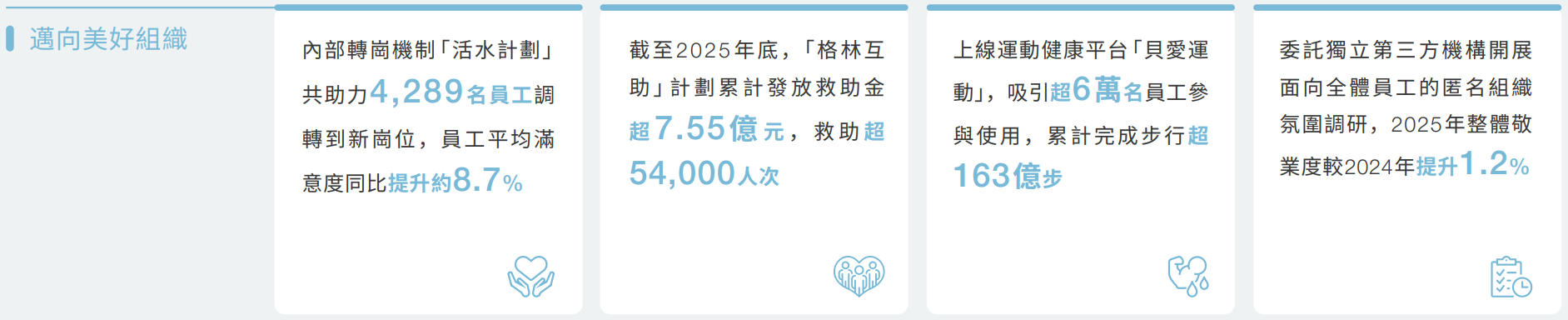
On employee rights, the report overall presents many positive narratives, including building a “diversity, equity, and inclusion” workplace, the “Living Water Plan” to facilitate internal transfers, and employee motivation and mutual growth. However, it gives relatively limited attention to practical issues such as organizational restructuring, changes in headcount, and employee turnover pressure. As of the end of 2025, Beike’s total number of employees was 119,245, a decrease of 15,827 from 135,072 at the end of 2024, with an overall employee turnover rate of 22.24%.
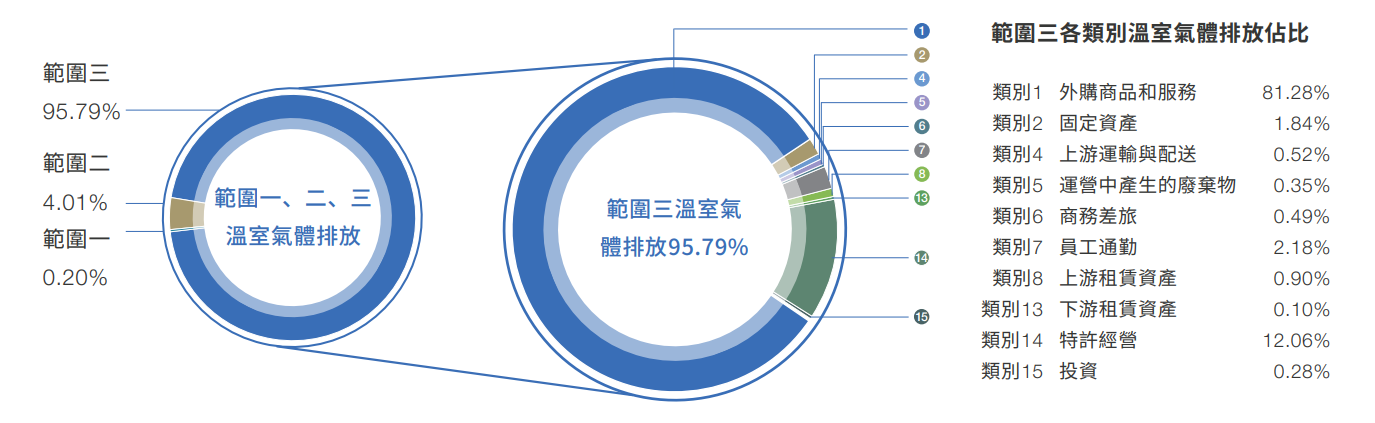
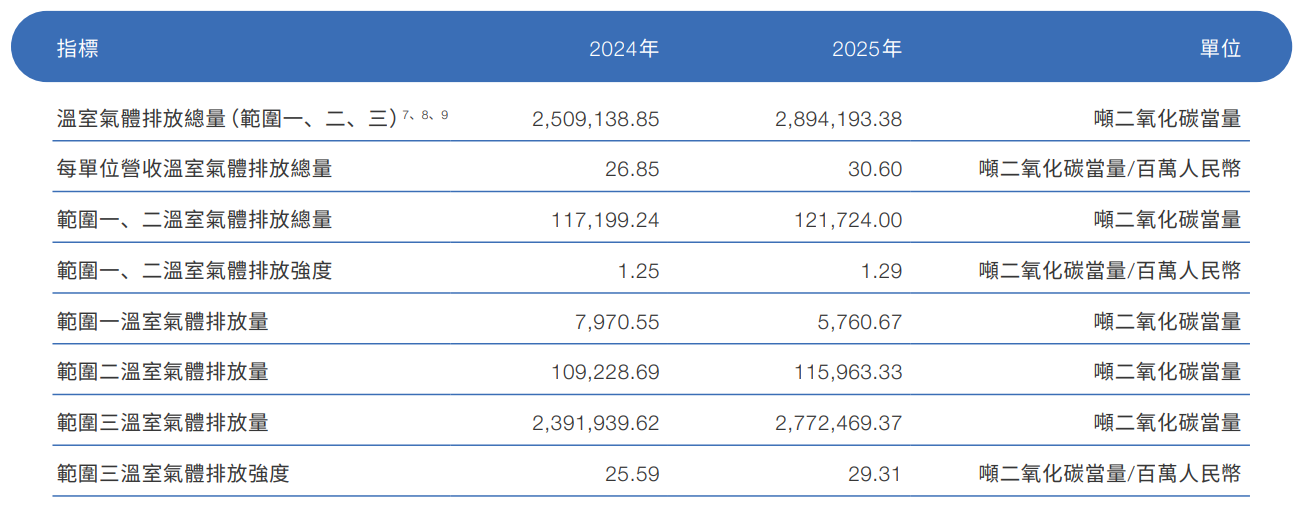
On the environmental dimension, Beike proposed achieving carbon neutrality at the operational level by no later than 2030, set a target to reduce the carbon emission intensity of its value chain by 30% compared to 2024, and conducted climate scenario analysis and greenhouse gas accounting. As a platform-based company, its environmental impact is mainly concentrated in Scope 3. It is commendable that, as of 2025, VR home viewings had accumulated over 15.54 billion views, with related functions cumulatively reducing carbon emissions by more than 28 million tonnes, demonstrating a certain representativeness in digital emission reduction scenarios.
However, the report has not yet disclosed a clearer phased emission reduction pathway or annual implementation rhythm. In the future, if the emission reduction roadmap, key milestones, and implementation progress can be further disclosed, it will help enhance the verifiability of environmental targets.
Overall, Beike’s 2025 ESG report has a relatively well-developed framework and attempts to deeply integrate ESG with its core business, forming certain distinctive features in consumer protection, technological innovation, and climate governance. At the same time, the report’s responses to potential risks and controversial topics remain relatively limited, and some content still exhibits a characteristic of “more vision statements, less quantitative verification.” How to move from “platform responsibility narratives” further toward quantifiable and verifiable responsibility governance may become the key to its next phase of ESG disclosure.
Author:Qinger




 Room 1808,Wayson Commercial Building, 28 Connaught Road West, Sheung Wan, Hong Kong.


