
Recently, Cambricon released its 2025 Sustainability Report, systematically disclosing its practices in corporate governance, social responsibility, and environmental protection during 2025. The report references the Shanghai Stock Exchange's guidelines for sustainability reporting by listed companies, the GRI Standards, and the SDGs, and includes a key performance table and indicator index, presenting a relatively complete disclosure structure.
Compared to its 2024 Environmental, Social and Governance Report, the 2025 report shows significant progress. However, in terms of actual disclosure quality, the report still exhibits a clear pattern of "framework compliance with light content." While a considerable number of key performance indicators are disclosed, most only present data for a single year, lacking historical trend comparisons. Furthermore, the company has not yet obtained external assurance for the report.
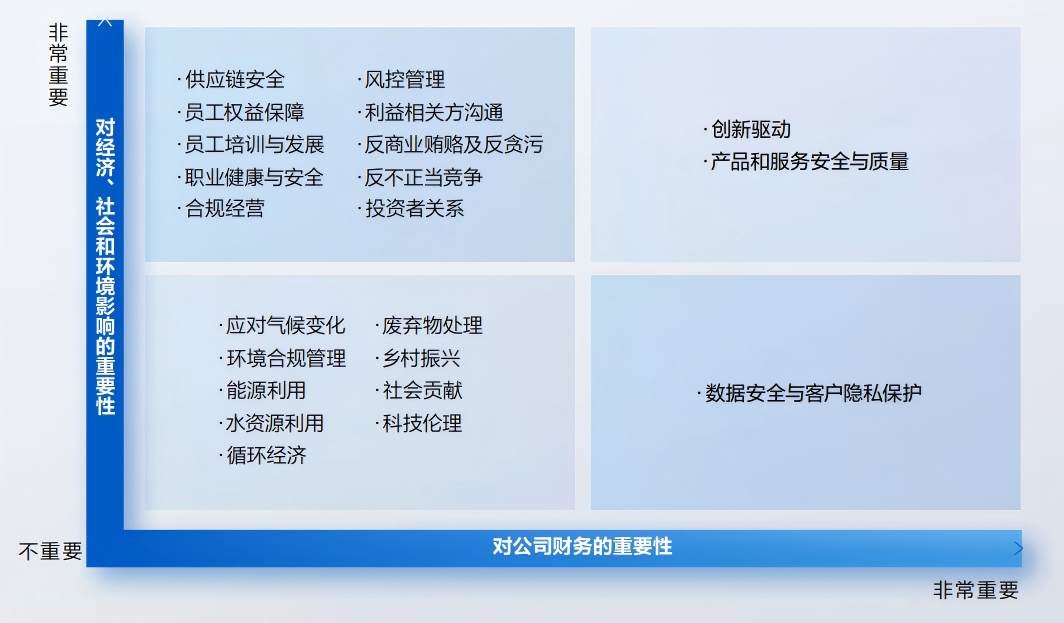
According to the report, the company determines issue materiality based on two dimensions: impact materiality and financial materiality, identifying "innovation-driven" and "product and service safety and quality" as the most material issues.
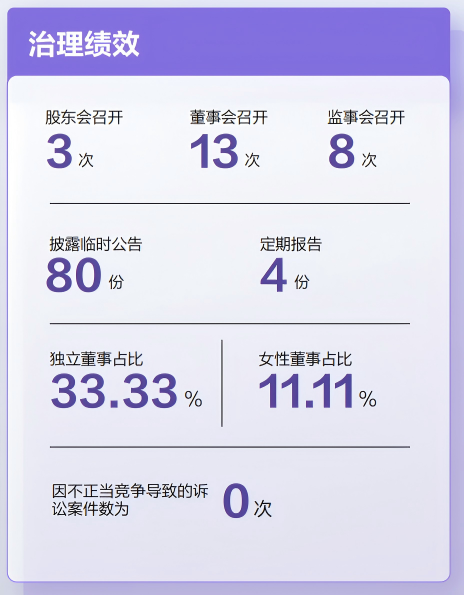
From a governance perspective, the company has established a three-tier management system consisting of the "Board of Directors – Strategy and ESG Committee – ESG Working Group." In 2025, the company continued to refine its corporate governance structure and internal control systems, amending 28 governance policies including the Articles of Association, Rules of Procedure for the Board of Directors, and Policies on the Management of Related Party Transactions. It also formulated the Market Value Management System, Public Opinion Management System, and Departure Management System for Directors and Senior Executives to further standardize corporate operations and enhance governance levels.
In terms of integrity and business ethics, the report discloses that in 2025, the company found one employee in violation of procurement policies. The employee was disciplined in accordance with company rules and regulations, and the case was communicated to all staff.
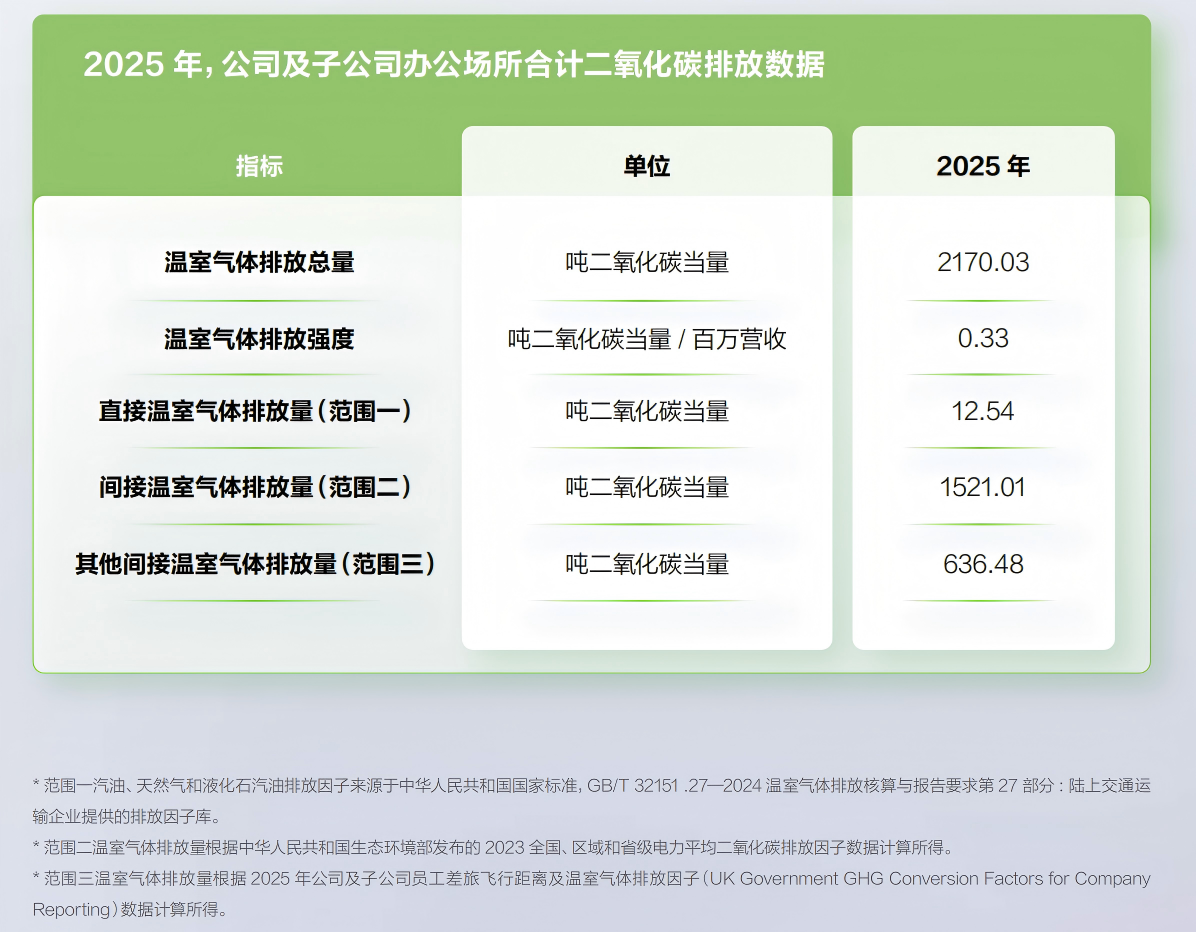
On the environmental dimension, the report states that the company holds ISO 14001 environmental management system certification and did not violate any environmental laws or regulations, nor receive any regulatory penalties throughout the year. Although the company has identified climate risks, it has not set carbon reduction targets. While the company disclosed greenhouse gas emissions (Scope 1, 2, and 3) data, the coverage of Scope 3 is relatively limited.
Cambricon operates under a fabless model, focusing on the design and sale of intelligent chips while outsourcing wafer fabrication, packaging, testing, and other processes to foundries, packaging and testing companies, and other manufacturing partners. This model results in relatively low waste and pollutant generation from the company's own operations, thus presenting a low direct environmental burden. However, the company's primary environmental impact has not disappeared but has been transferred to its supply chain. As an AI chip company, Cambricon's product-level environmental value has yet to be demonstrated. The report does not disclose chip energy efficiency metrics, nor does it address product carbon footprints.
Additionally, because water utility fees for several of the company's office locations are included in property management fees, making accurate figures difficult to calculate, the company did not separately disclose total water consumption.
On the social dimension, the report covers topics such as innovation-driven initiatives, product and service safety and quality, data security, supply chain management, and employee development.
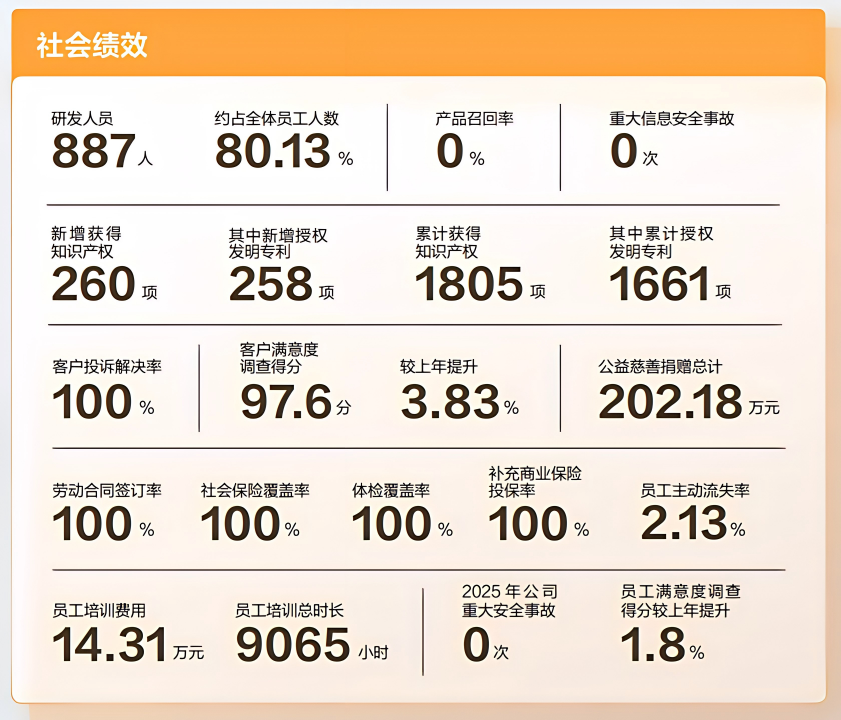
Disclosure on the innovation-driven topic is relatively comprehensive. In 2025, the company's R&D investment accounted for approximately 18% of operating revenue; R&D personnel comprised over 80% of the workforce, of whom more than 80.95% hold a master's degree or higher; and the company has accumulated 1,805 intellectual property rights, demonstrating a strong technology-oriented profile.
Regarding data security and technology ethics, the company disclosed that during the reporting period, it had no incidents of being investigated or penalized by authorities for violations of technology ethics regulations, achieving its goal of "zero information leakage and zero major information security incidents."
However, disclosure on supply chain management is relatively limited. In 2025, the company conducted performance evaluations on 80 suppliers (or supplier instances) but did not disclose the total number of suppliers or the coverage ratio of ESG audits. Supply chain management transparency needs improvement.
Overall, Cambricon's 2025 ESG report demonstrates positive progress in governance structure enhancement, innovation-driven disclosure, and compliance system development. Nevertheless, issues such as obvious environmental data gaps, insufficient supply chain transparency, and the lack of historical trend comparisons for key performance indicators limit the report's practical reference value. As a representative company in the AI chip design sector, Cambricon could further deepen its efforts in setting carbon reduction targets, disclosing product energy efficiency, and strengthening supply chain ESG management, thereby advancing its ESG work from "compliance response" to "value creation."
Author:Qinger




 Room 1808,Wayson Commercial Building, 28 Connaught Road West, Sheung Wan, Hong Kong.


